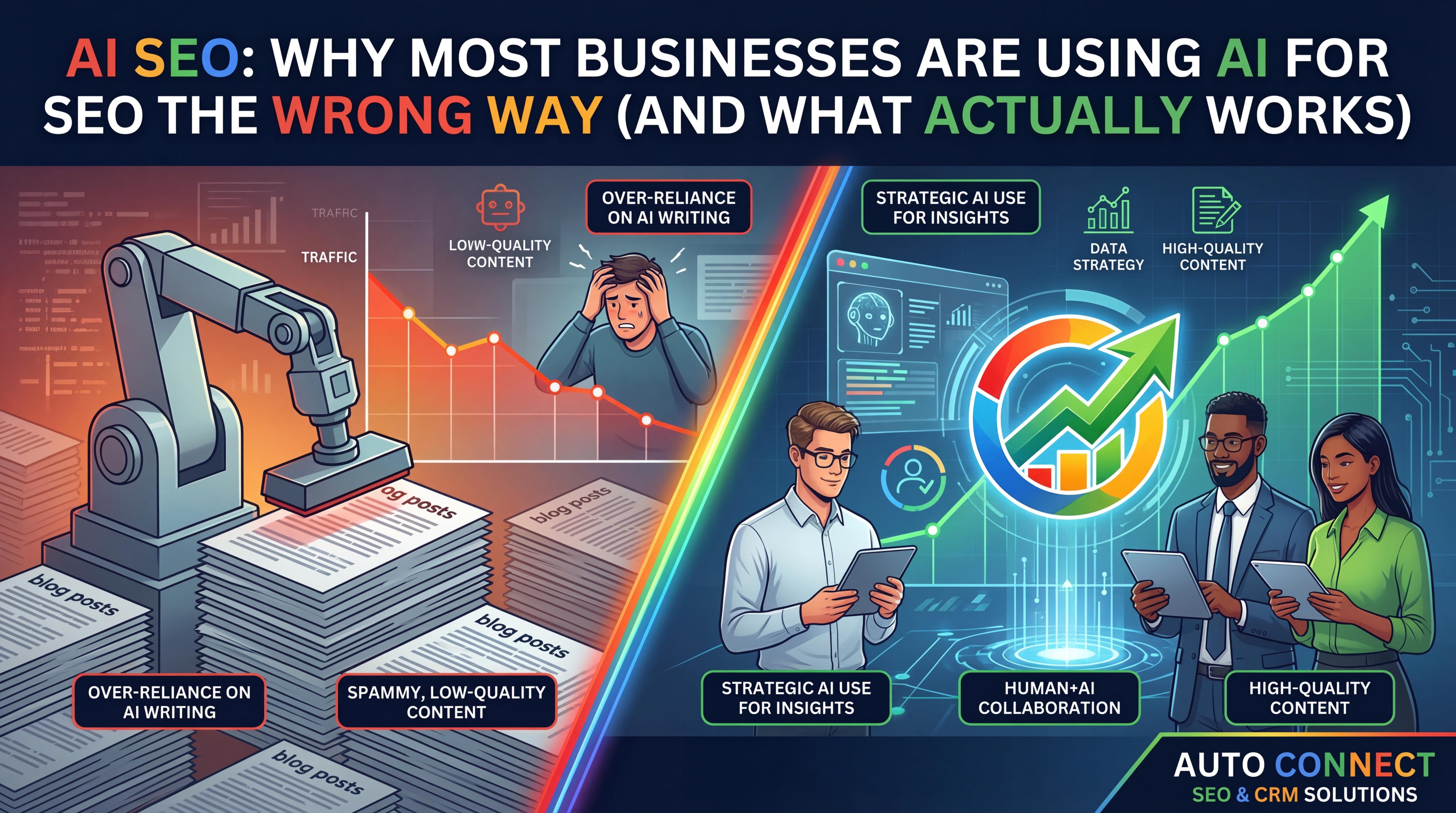
AI SEO: Why Most Businesses Are Using AI for SEO the Wrong Way (And What Actually Works)
Artificial intelligence is transforming how businesses approach digital marketing, and AI SEO has quickly become one of the most talked-about strategies in search engine optimization. From AI writing tools to automated keyword research platforms, companies everywhere are trying to leverage AI SEO in hopes of ranking faster, producing more content, and generating more traffic. However, the reality is that most businesses are using AI SEO incorrectly. They assume that using AI means generating hundreds of articles, automating everything, and letting technology replace strategy. In reality, AI SEO is powerful only when it is part of a structured marketing system that includes real SEO strategy, local SEO visibility, lead capture systems, and CRM follow-up automation. Businesses that understand how AI SEO fits inside a complete marketing system are the ones seeing real results, while those relying only on automation often produce content that never ranks or converts.
What Is AI SEO?
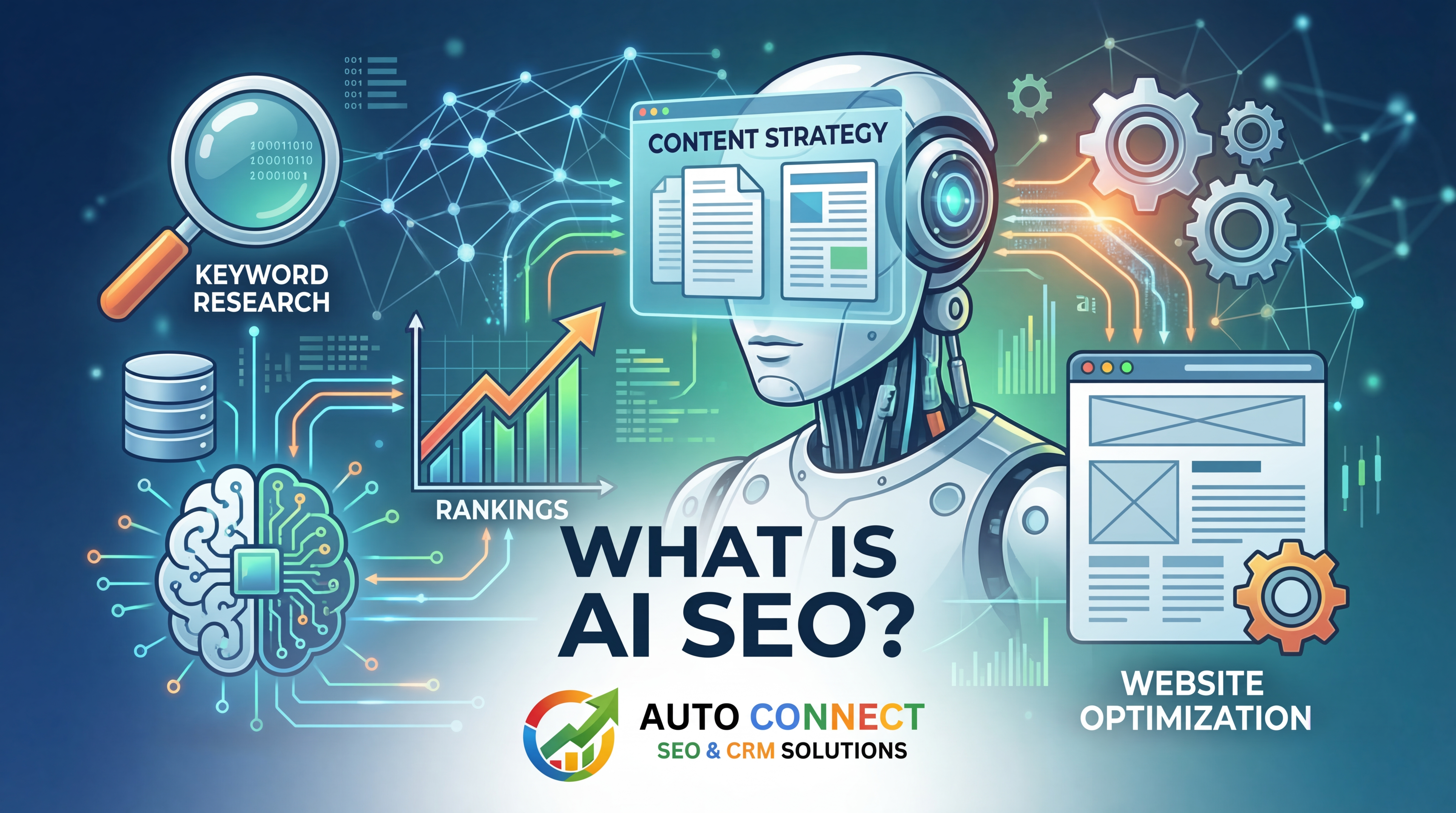
AI SEO refers to the use of artificial intelligence tools to support and enhance search engine optimization tasks such as keyword research, content planning, blog drafting, SERP analysis, internal linking strategies, and on-page optimization. Instead of manually analyzing massive keyword lists or competitor pages, AI SEO tools can process large amounts of search data quickly and identify patterns that help guide SEO decisions. Many modern marketing teams now use AI SEO tools to generate blog outlines, identify keyword clusters, create topic ideas, and draft initial content. However, the key thing to understand is that AI SEO does not replace strategy. It simply accelerates the process of executing SEO tasks. The real value of AI SEO comes from combining machine speed with human expertise, allowing businesses to build stronger SEO campaigns faster while still maintaining strategic control.
The Problem With Most AI SEO Advice
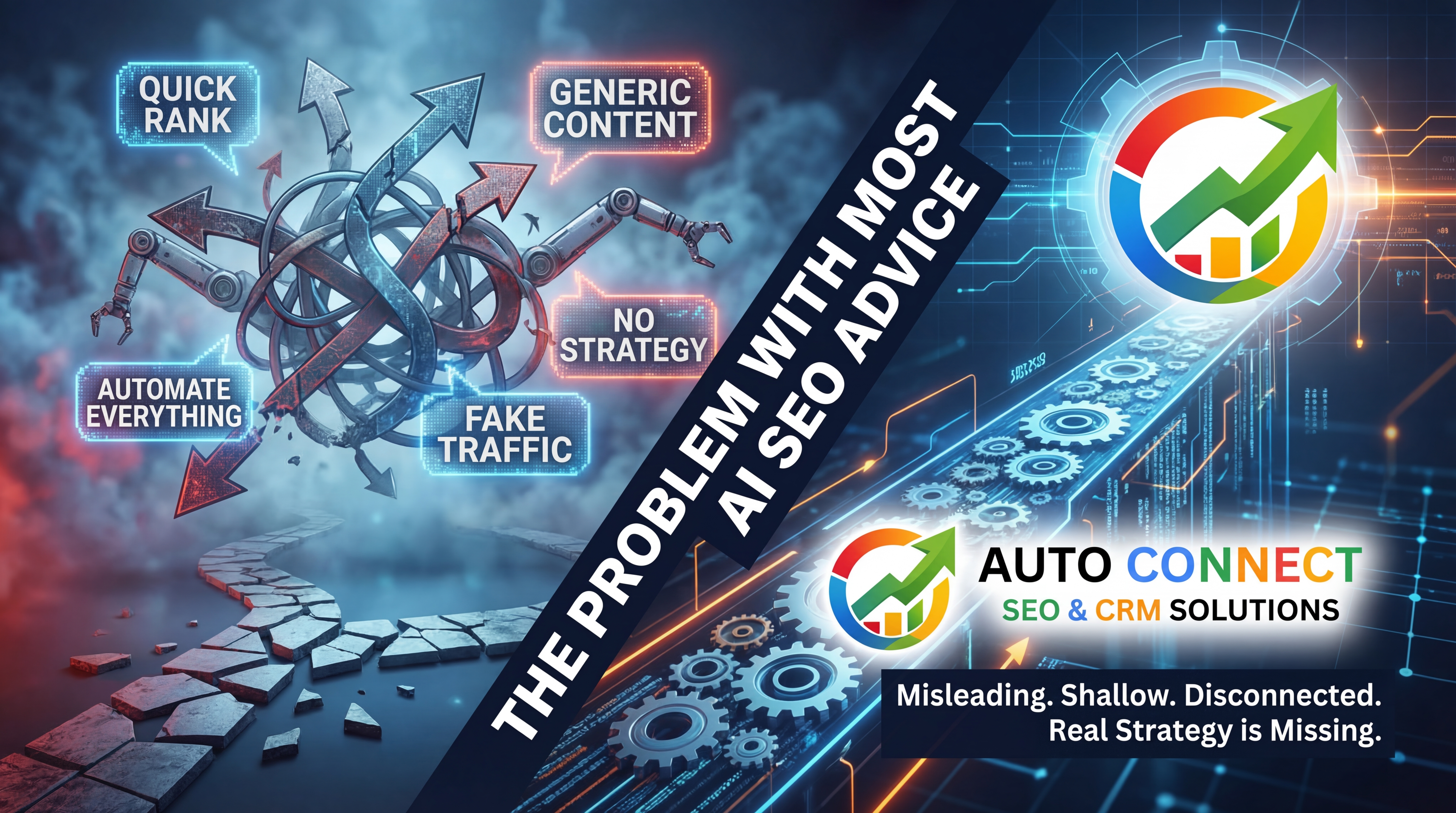
When you search online for advice about AI SEO, most articles focus on the tools themselves rather than the strategy behind them. The reality is that much of the current AI SEO advice is shallow and encourages practices that do not produce sustainable rankings. Many businesses adopt AI SEO expecting instant results, but they often miss the core elements that actually drive long-term search visibility. The biggest problems with how companies use AI SEO today revolve around misunderstanding how search engines evaluate content, how authority is built online, and how AI should support — not replace — a structured SEO strategy.
1. Mass-Producing Weak Content
One of the most common mistakes businesses make with AI SEO is assuming that publishing large volumes of AI-generated content will automatically lead to rankings. This belief has caused many websites to flood their blogs with low-value articles created entirely through automation. However, AI SEO does not work this way. Google’s algorithms prioritize relevance, topical authority, helpful content, and strong internal linking structures rather than sheer content volume. While AI SEO tools can assist with content creation, they cannot independently build authority for a website. Without thoughtful strategy and editorial oversight, mass-produced AI content becomes noise rather than a competitive advantage.
2. Agencies Publishing AI Content Without Editing
Another growing issue within the AI SEO industry is agencies publishing AI-generated articles without meaningful human editing. Many marketing providers now rely on AI to generate blog posts, add a quick headline, and publish the content immediately. This approach might technically qualify as AI SEO, but it lacks the expertise, examples, case studies, and insights that make content valuable. When AI SEO is used without human refinement, the result is content that looks identical to thousands of other articles online. Search engines are increasingly capable of recognizing generic, low-value material, which means this shortcut approach to AI SEO rarely produces long-term rankings.
3. Confusing Speed With Strategy
Another misconception about AI SEO is that speed equals effectiveness. AI makes it possible to generate blog drafts, outlines, and keyword lists faster than ever before, but speed alone does not create a successful SEO campaign. A true AI SEO strategy involves much more than publishing content quickly. It requires keyword clustering, strong service page optimization, internal linking structures, location-based targeting, and conversion-focused website design. Without this framework, AI SEO becomes nothing more than rapid content production with no strategic direction behind it.
4. Pretending AI Replaces SEO Professionals
Some people believe AI SEO means that artificial intelligence can replace SEO professionals entirely. This assumption ignores the strategic side of search engine optimization. AI tools cannot analyze complex business models, design lead generation funnels, understand local markets, or build brand authority. What AI SEO tools can do is assist professionals by accelerating the research and drafting stages of SEO work. Human expertise is still required to design the overall SEO strategy, choose the right keywords, optimize local search presence, and ensure the content reflects real industry knowledge.
5. Ignoring Lead Conversion
Perhaps the biggest mistake businesses make when implementing AI SEO is focusing only on traffic instead of conversions. Many companies measure SEO success purely by rankings or website visits, but traffic alone does not grow a business. The real goal of AI SEO should be generating leads that turn into customers. This means SEO campaigns must connect to lead capture systems, CRM pipelines, and automated follow-up processes. Without those systems in place, even the best AI SEO campaign may produce traffic that never converts into revenue.
How AI SEO Actually Works (When Done Correctly)
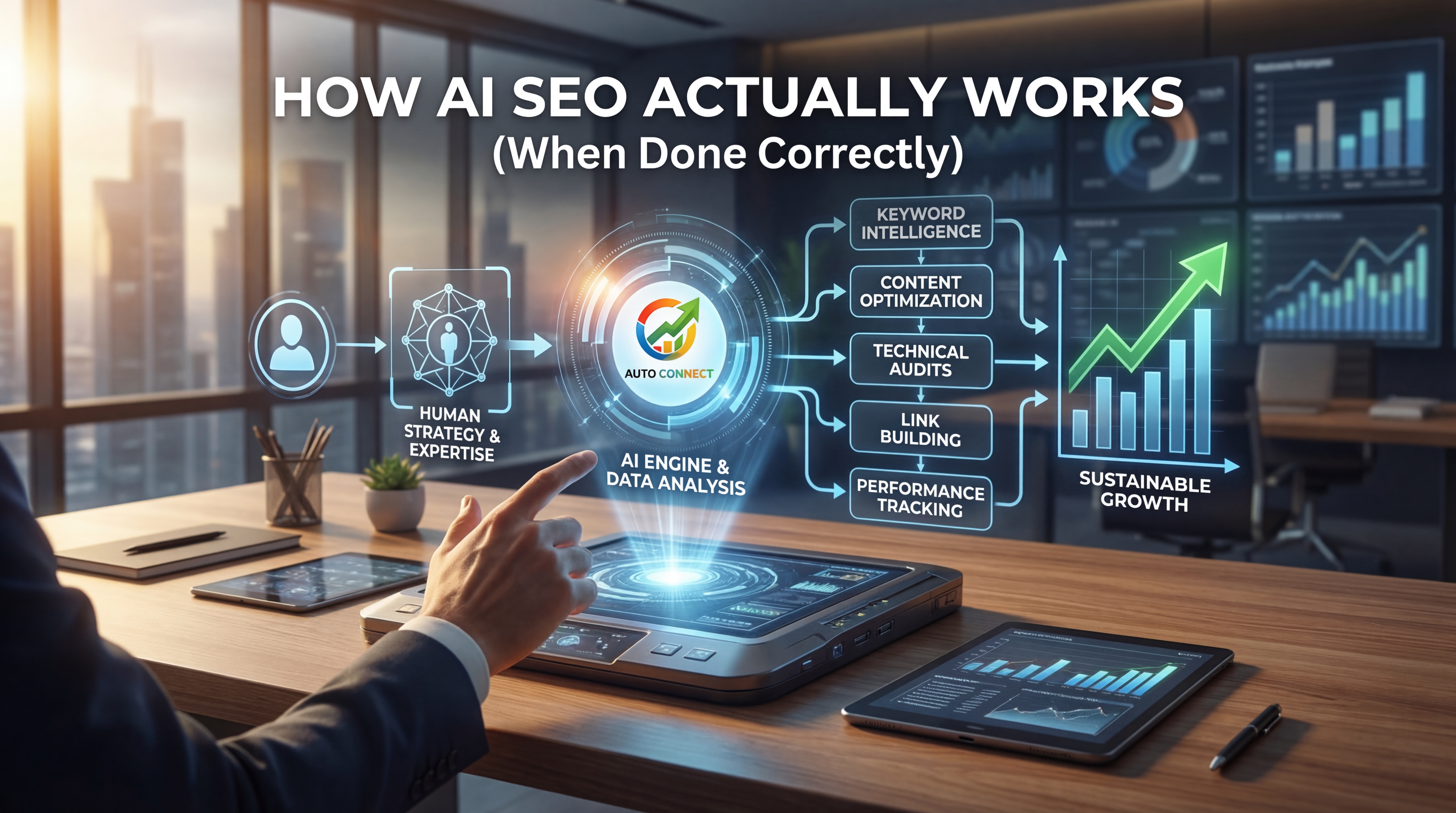
When used properly, AI SEO can dramatically improve the efficiency of search marketing workflows. In a structured SEO process, AI SEO tools help accelerate tasks like keyword research, content outlines, blog drafting, internal linking strategies, and content calendar planning. By automating these repetitive tasks, AI SEO allows marketing teams to focus more energy on strategy, content quality, and conversion optimization. In this workflow, artificial intelligence handles the heavy lifting of research and drafting while human experts control the direction of the campaign. The best AI SEO strategies combine machine efficiency with human decision-making, ensuring the content aligns with search intent, business goals, and local market relevance.
Real Examples of AI SEO in Action
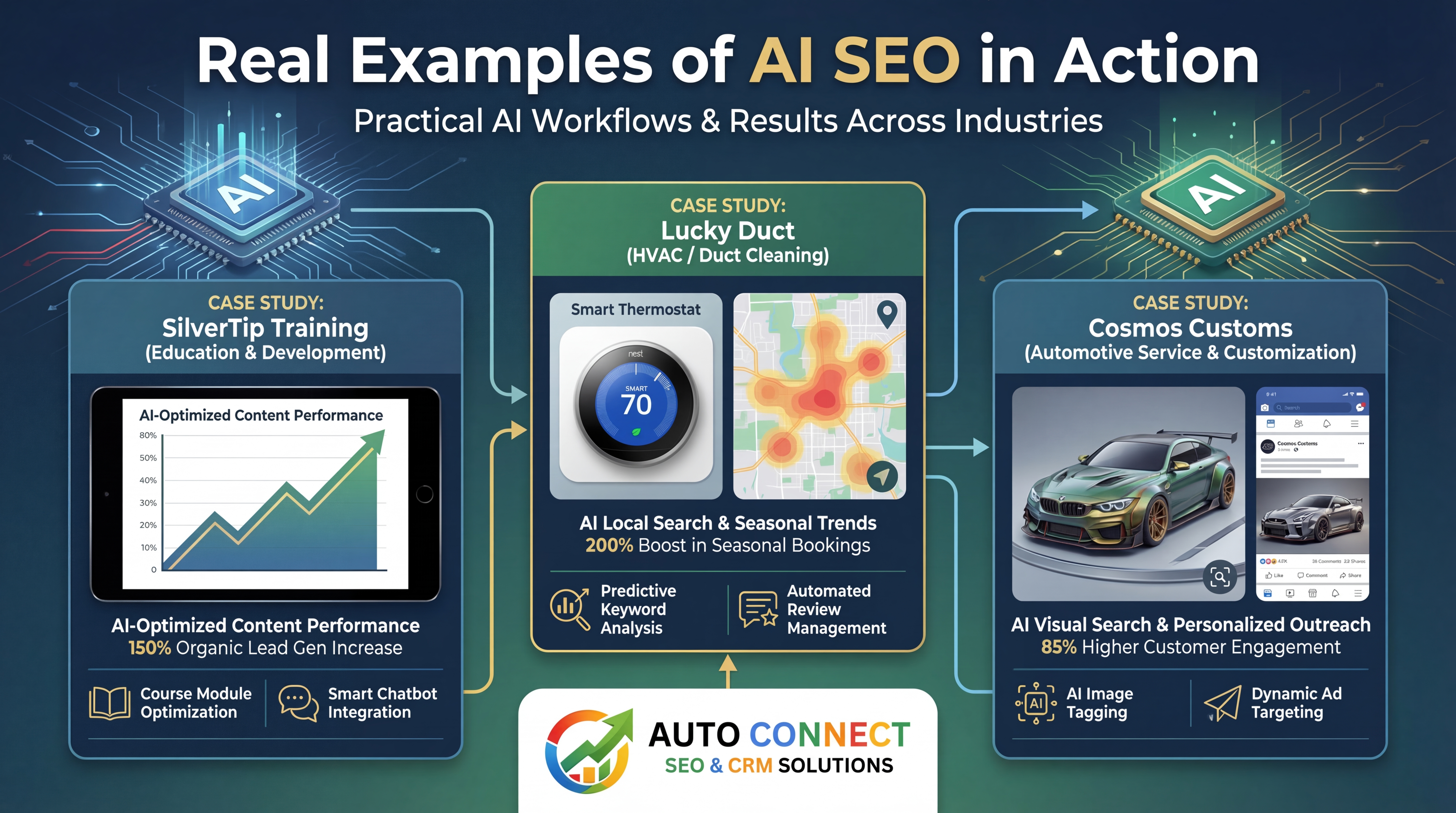
Understanding how AI SEO works in theory is helpful, but real-world examples demonstrate how it improves SEO execution. Across several businesses, AI SEO has helped accelerate research, planning, and content production while human strategy continues to guide the campaign’s direction.
Case Study: Cosmos Customs (Automotive Service)
Cosmos Customs, an automotive service business in Calgary, struggled with low search visibility and a weak service page structure. By introducing AI SEO tools into the workflow, the team was able to accelerate blog topic research, generate structured SEO outlines, and produce initial content drafts much faster. However, the success of the AI SEO strategy came from the human work layered on top of those drafts, including local keyword targeting, service page optimization, internal linking improvements, and on-page SEO enhancements. As a result, the business developed a stronger website structure, improved its search visibility, and maintained consistent content production.
Case Study: Lucky Duct (HVAC / Duct Cleaning)
Lucky Duct, a duct cleaning and HVAC service company in Calgary, initially had limited SEO content and weak online visibility. Through the use of AI SEO, the marketing workflow became much more efficient. AI tools helped with blog topic research, content outlines, and social media content planning. Human expertise then focused on optimizing service pages, strengthening Google Business Profile visibility, and building internal linking structures. The combination of human strategy and AI SEO support helped the business improve its search presence and maintain more consistent content output.
Case Study: SilverTip Training
SilverTip Training offers specialized health and fitness services that were difficult to explain clearly online. AI SEO tools helped structure educational blog outlines and organize complex training topics into clearer content categories. However, human expertise remained essential for translating industry knowledge into accessible messaging and aligning the content with the right SEO keywords. The result was improved educational content that built stronger topical authority and made the company’s services easier for potential clients to understand.
Why AI SEO Alone Is Not Enough
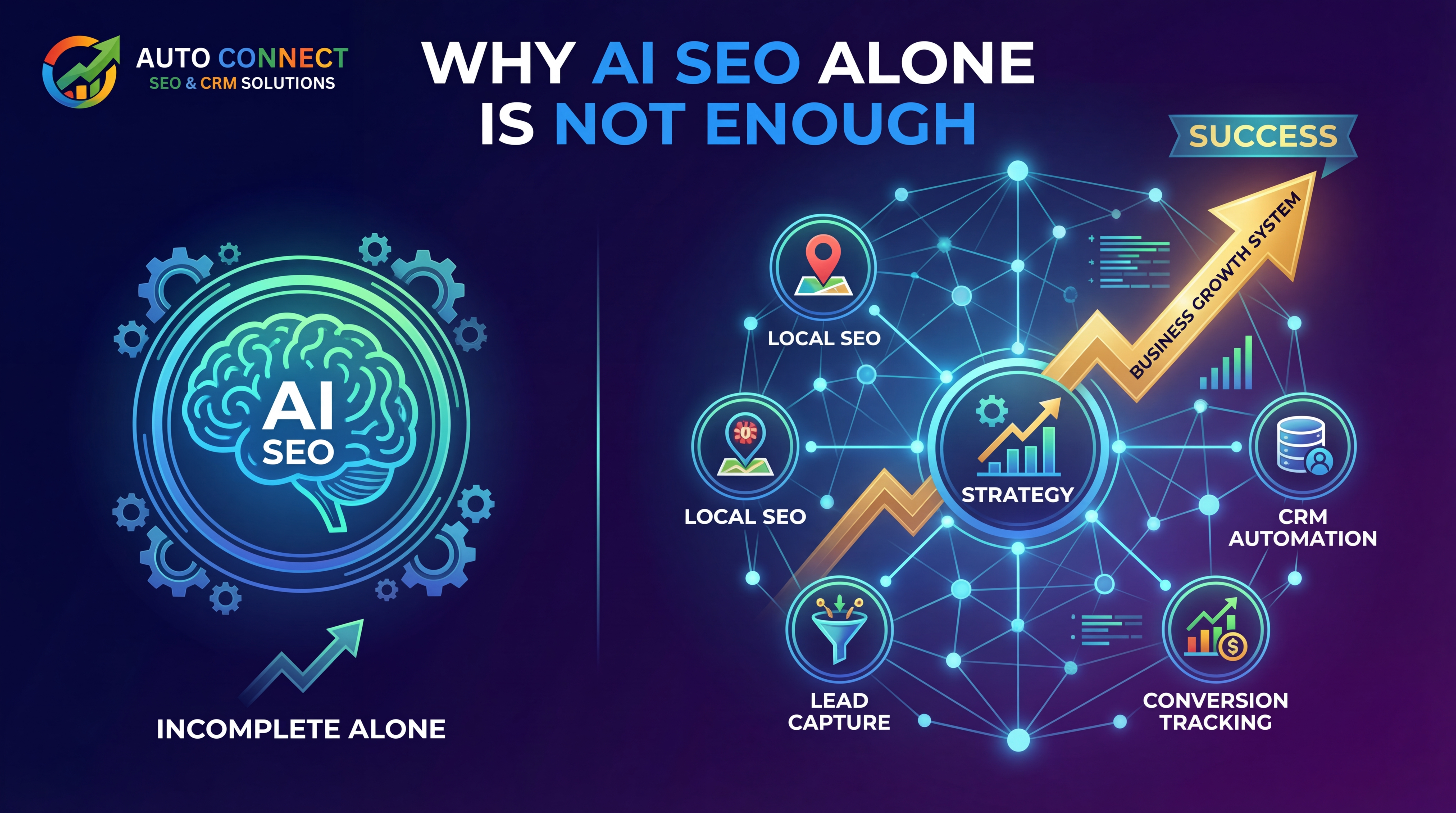
Even though AI SEO tools can significantly improve the speed of SEO workflows, artificial intelligence alone is not enough to grow a business online. Rankings and traffic are only one part of the equation. For SEO to produce real results, visibility must be connected to lead generation and follow-up systems. Businesses need a system that not only brings people to the website but also captures leads, tracks inquiries, and converts prospects into paying customers. Without this infrastructure, even a successful AI SEO campaign may produce traffic that never turns into sales.
The Real Growth System: AI + SEO + CRM
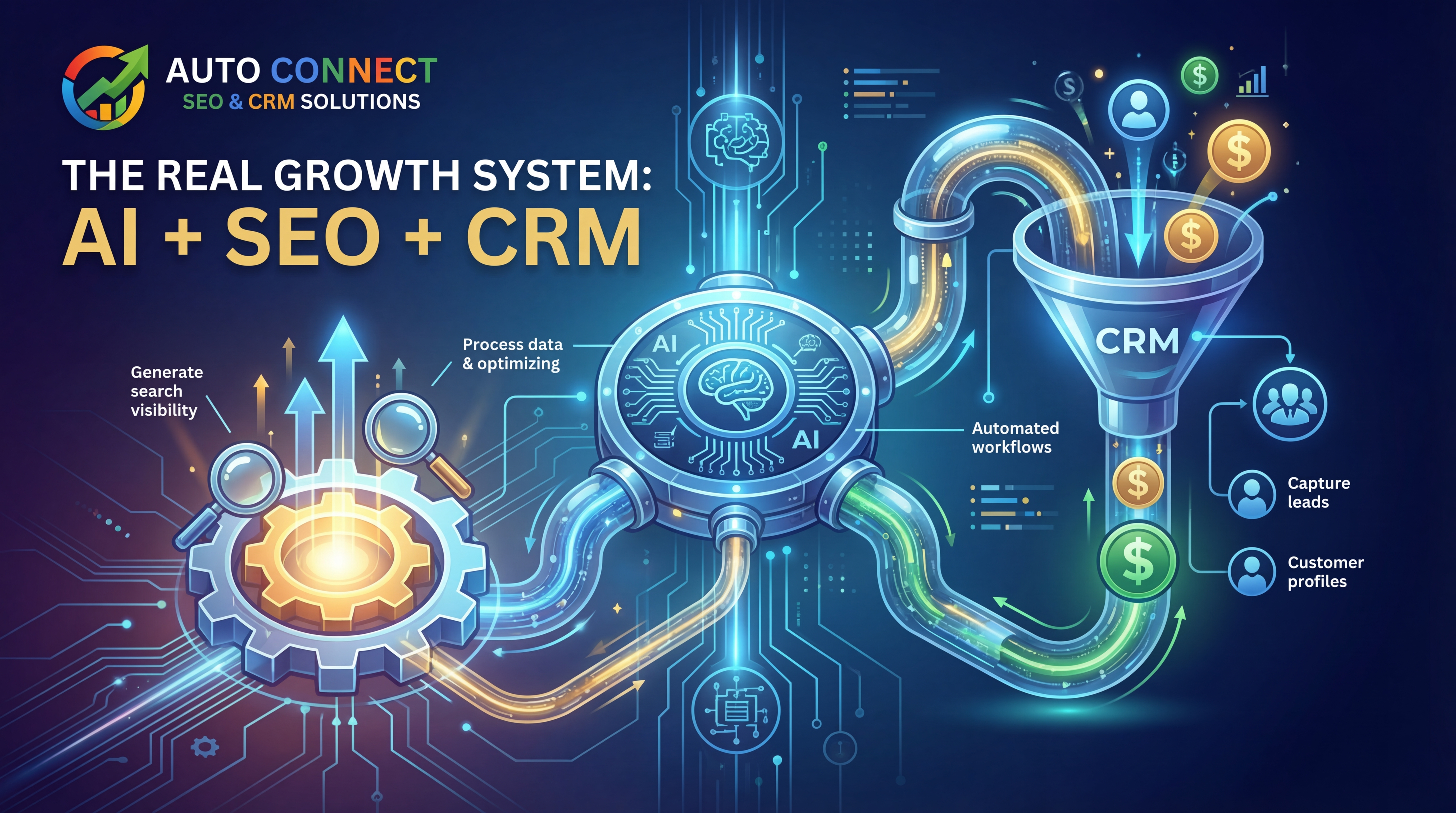
The most effective digital growth strategies combine AI SEO, traditional SEO expertise, and CRM automation into a single system. AI speeds up research, outlines, and drafting. SEO ensures businesses appear in search results and Google Maps. CRM software captures leads and manages automated follow-up. AutoConnect CRM was built around this exact concept. The platform helps businesses increase visibility through local SEO and Google Maps optimization while also providing tools for lead capture, automated text follow-ups, missed-call responses, and sales pipeline management. When AI SEO, search visibility, and CRM automation work together, businesses can transform website traffic into real customers rather than just page views.
Final Thoughts: The Future of AI SEO
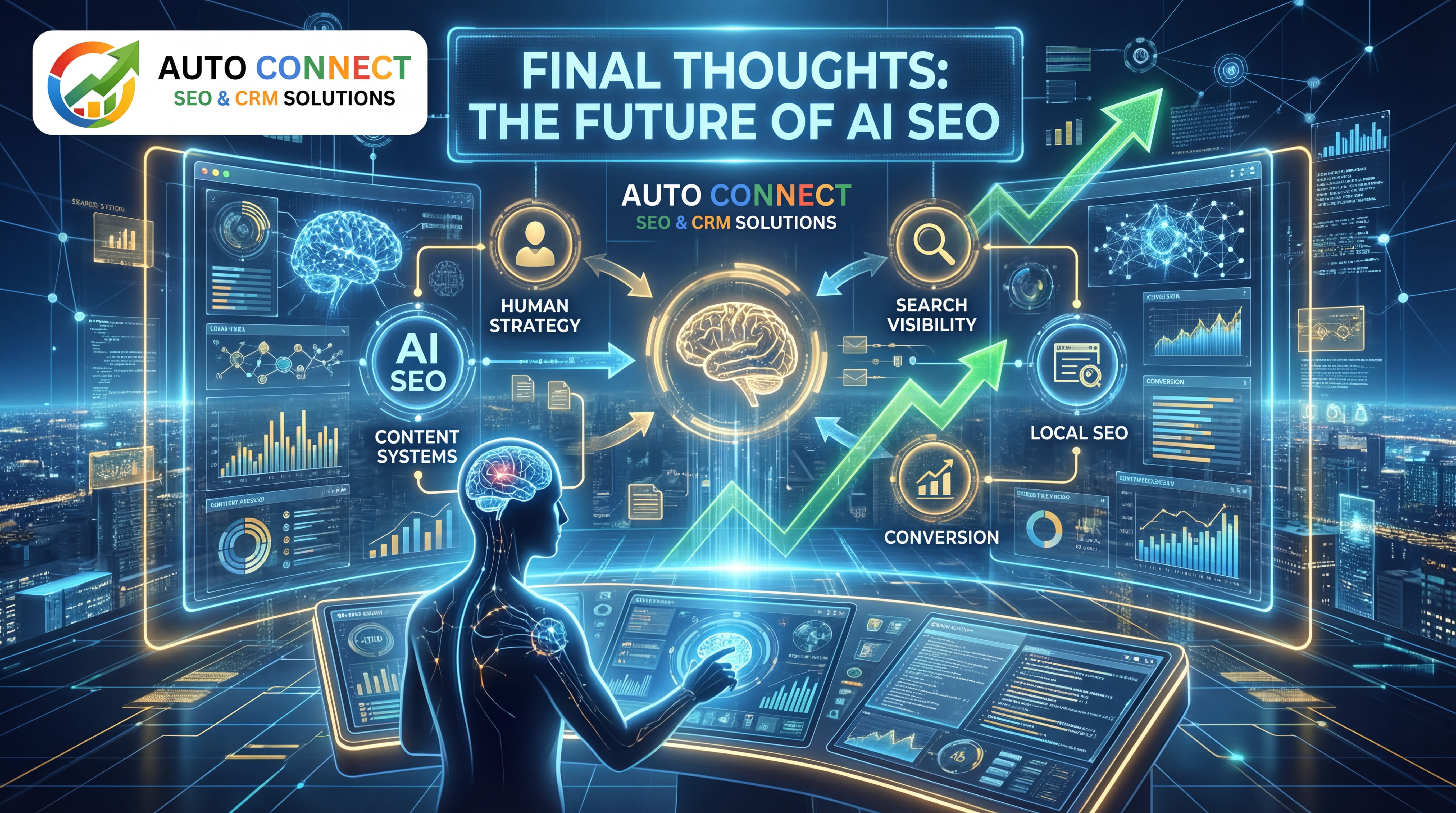
The rise of AI SEO is changing how marketing teams approach search engine optimization. Artificial intelligence makes research faster, outlines easier to generate, and content production more efficient. However, strategy, authority, and conversion systems remain human-driven responsibilities. The businesses that succeed with AI SEO understand that technology accelerates execution but does not replace strategy. The future of SEO belongs to companies that combine AI-powered workflows with strong SEO structure, local visibility, and CRM automation. When used correctly, AI SEO becomes a powerful engine that drives a complete growth system rather than just a faster way to produce content.


